What's in it
A label is allowed to tell you less than you think
Nothing on this page is a scandal. Every practice below is ordinary, legal and used by brands you would recognize. That is rather the point: you can read a bag correctly, end to end, and still not know how much of anything is in it.
Here is what a label is permitted to leave out, how to read one anyway, and what we print instead.
Three things a bag can legally do
All three are allowed. None of them is lying.
The number is a floor, not an amount
A guaranteed analysis prints protein and fat as minimums and fibre and moisture as maximums. A bag saying "crude fat, min 6%" is promising you at least six per cent. It is not telling you whether the bag in your hand is six per cent or sixteen, and for a dog who cannot handle fat, that is the whole question.
The first ingredient is mostly water
Ingredients are ranked by weight as they go into the mixer, before anything is cooked. Fresh deboned chicken is roughly three-quarters water. Cook it and it loses most of that weight, so an ingredient that was listed first can end up well down the finished recipe. "Chicken first" is a statement about the mixer, not about the bag.
One ingredient can be listed as three
Peas, pea protein and pea fibre are all peas, but split across three lines each one weighs less and ranks lower, and the meat above them looks larger by comparison. Nothing about this is against the rules. It is just a way of arranging a true list so it reads better than it is.
Reading a guaranteed analysis
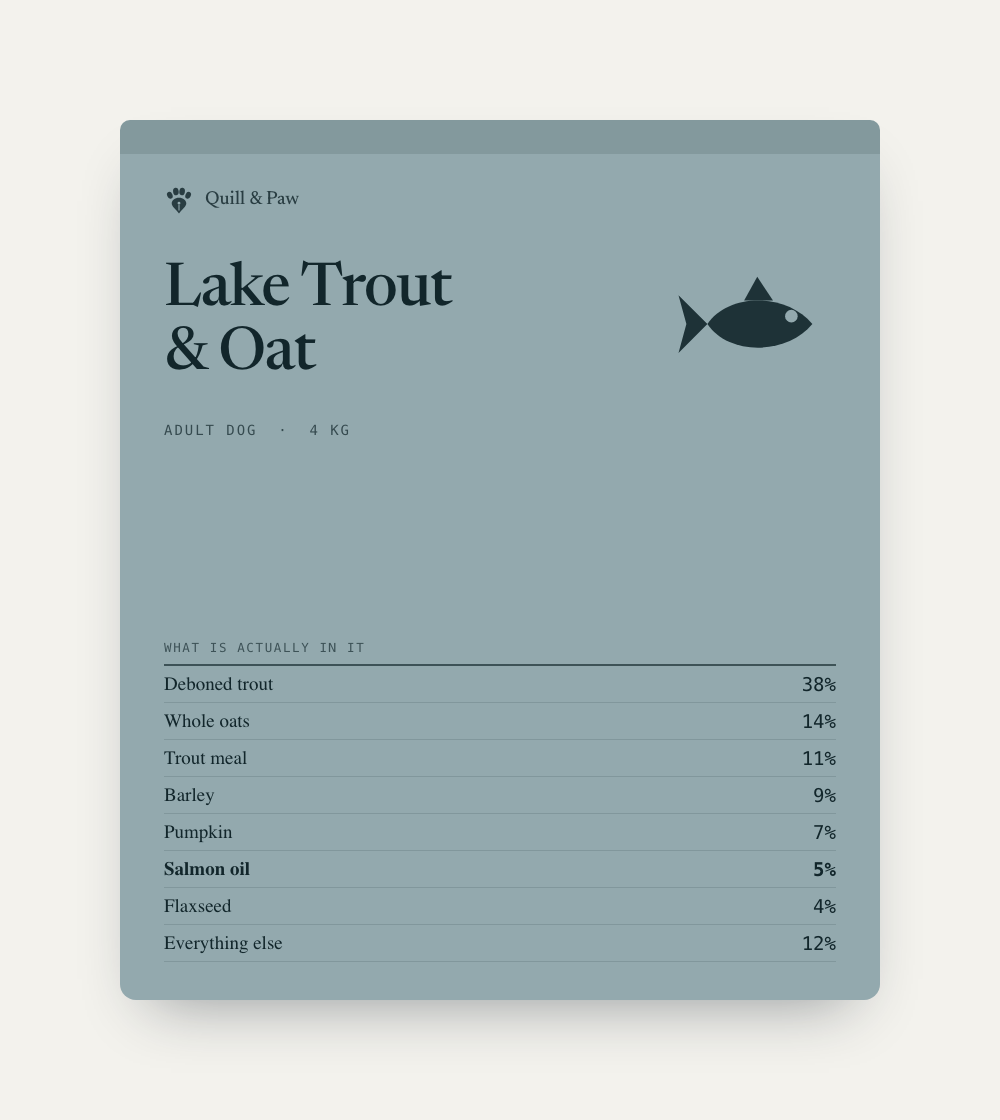
Four figures, and the two words that decide what they mean. Here is ours for Lake Trout & Oat, the recipe we make for dogs who do not settle easily.
| Crude protein | 29% min |
|---|---|
| Crude fat | 9% min |
| Crude fibre | 4% max |
| Moisture | 10% max |
Min and max are doing all the work. Protein and fat are promises of at least. Fibre and moisture are promises of at most. Only the ingredient percentages, which no rule obliges anyone to print, tell you what is actually in the bag.
The words
What the common terms on an ingredient list actually mean.
| Deboned chicken | Fresh meat, weighed wet. Roughly 70–75% of it is water that cooks off. |
|---|---|
| Chicken meal | Chicken already cooked and dried before it is weighed, so it is far more concentrated than the same weight of fresh. Lower down a list is not worse. |
| Meat by-product meal | The rendered parts left after the cuts people eat. Not necessarily poor quality, but "by-product" tells you nothing about which parts. |
| Natural flavour | Usually a digest sprayed on the outside so the food is eaten at all. Small quantity, rarely quantified. |
| “With chicken” | A naming convention, not a measurement. The word "with" lets a recipe lean on an ingredient present in a small share. |
What we do instead
Three commitments, all of them checkable on the bag.
Percentages, not adjectives
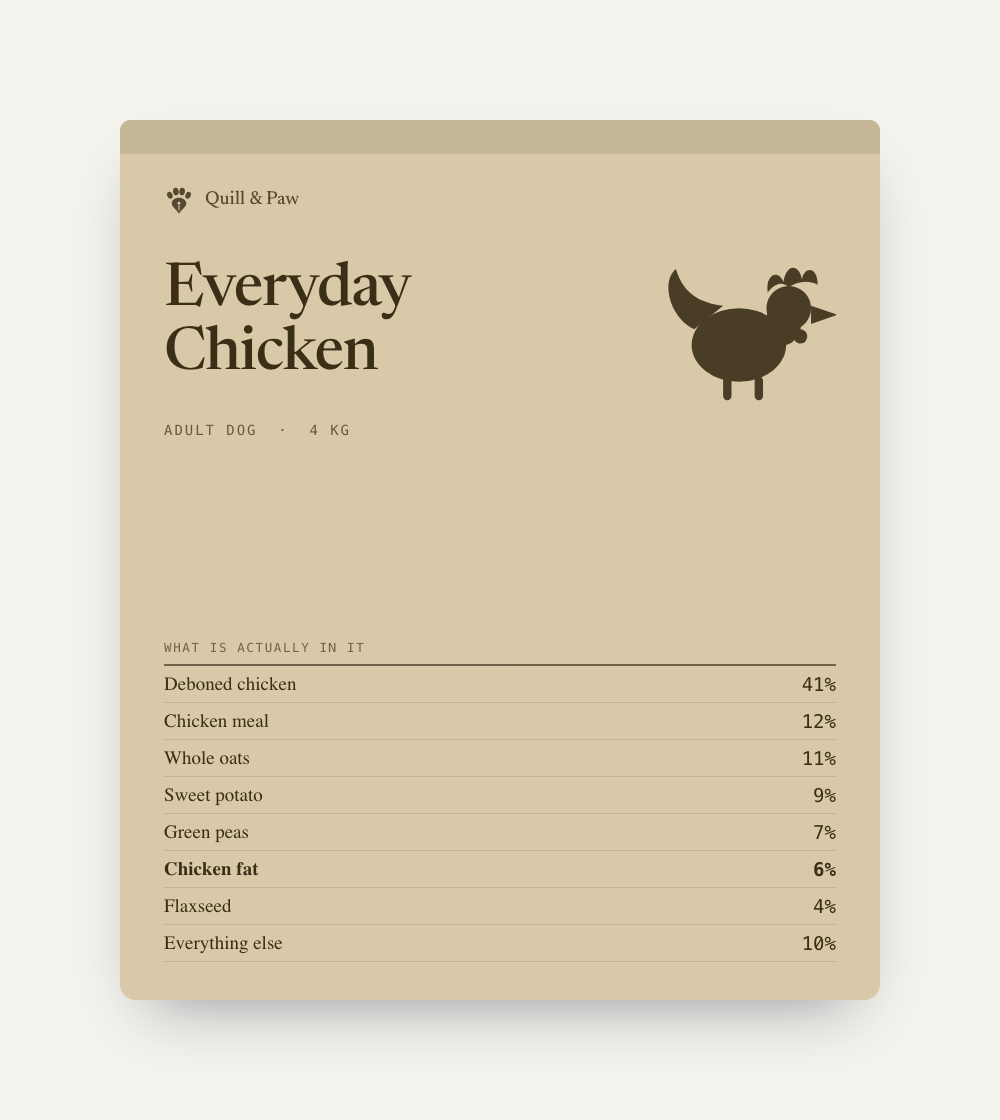
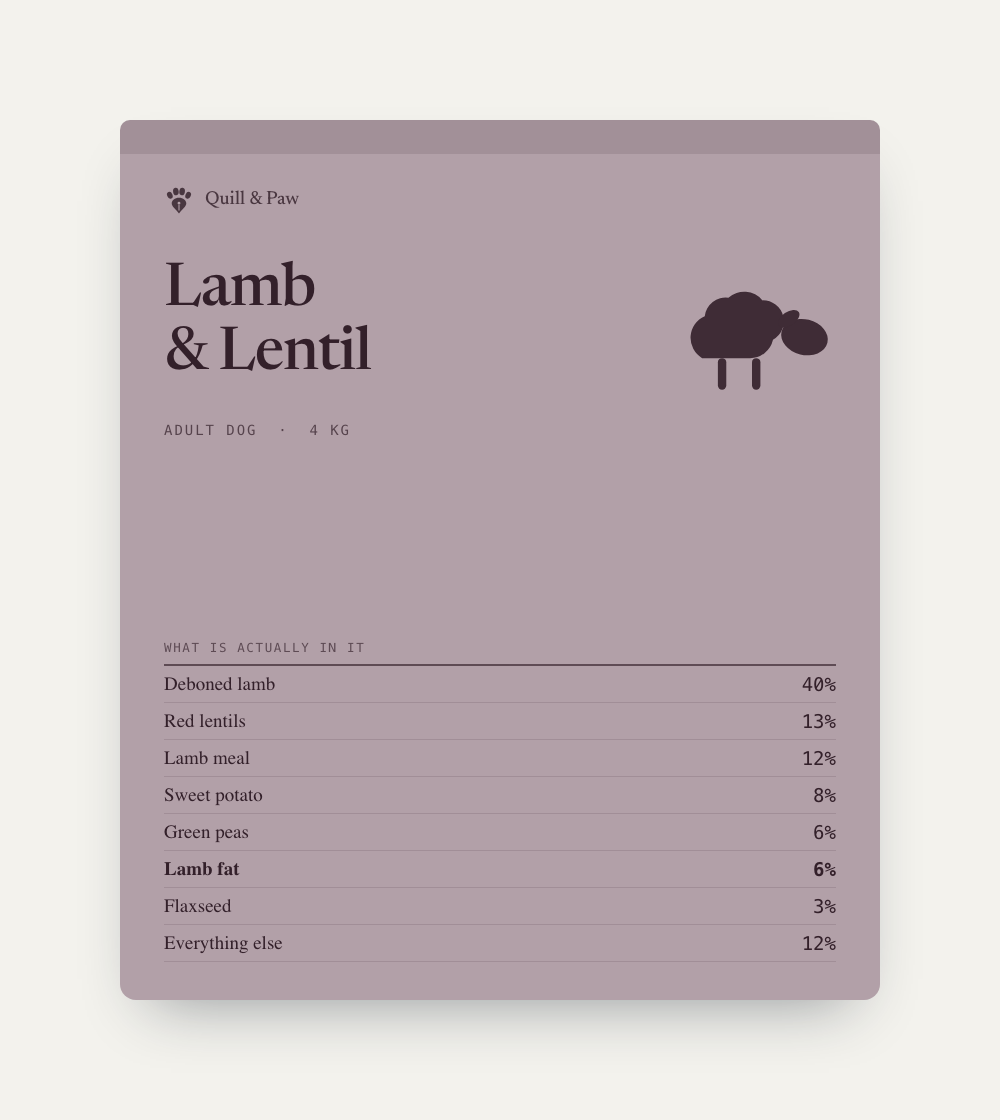
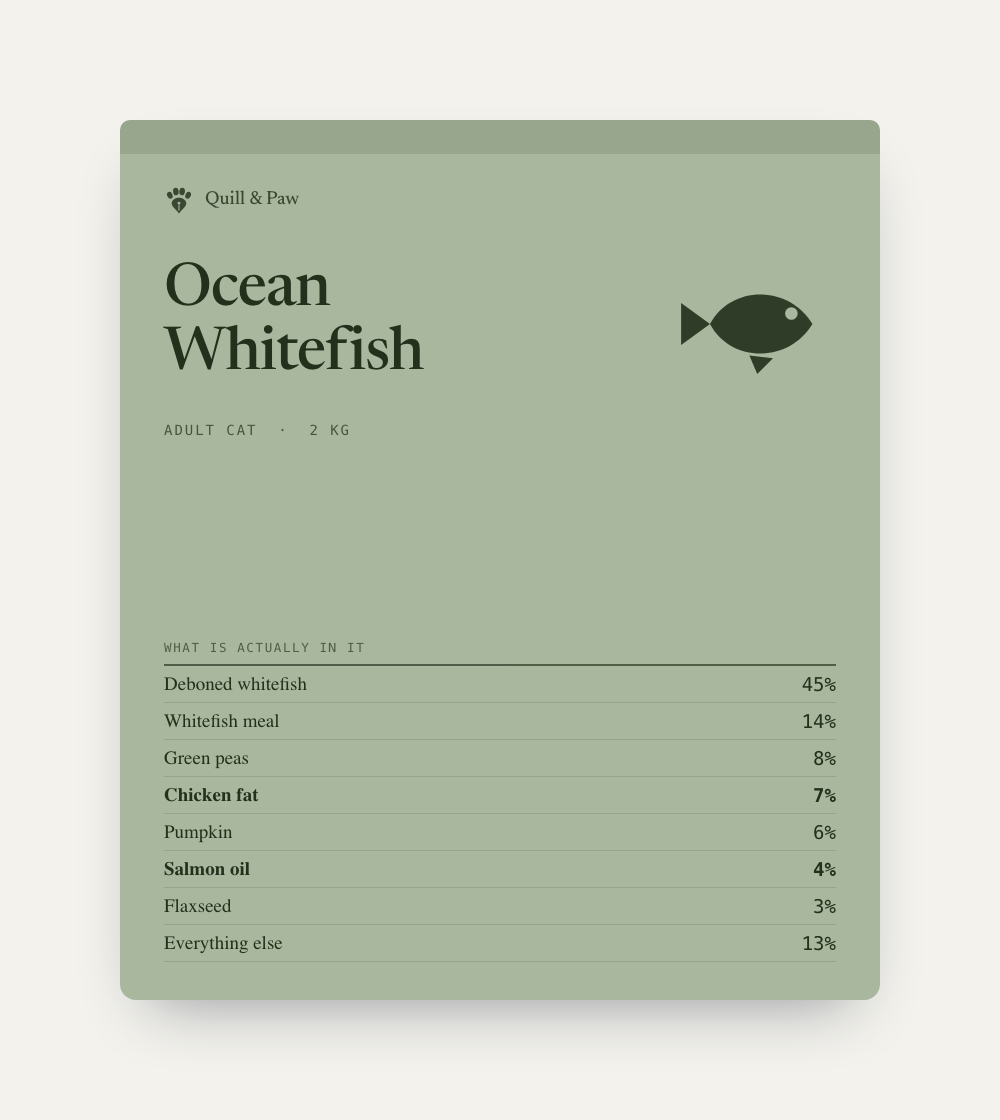
Every ingredient on every bag is printed with its percentage beside it, as mixed, before cooking. The fat figure is the actual figure.
One mill, one province
Everything is milled in small batches on the Grand River outside Paris, Ontario. One facility, so there is one answer to where it was made.
A batch number you can read
The batch and the week are printed on the bag rather than laser-etched into a seam, so if you ever need to ask us about one, you can find it.
Every recipe, in full
The lead ingredient and its percentage. Each page carries the whole recipe, including the last ten or twelve per cent that other bags call “and other ingredients”.
Where the rules come from
Worth knowing if you are comparing bags. In Canada there is no mandatory national nutrient standard for pet food. The Canadian Food Inspection Agency's oversight covers the import and export of animal products rather than whether a recipe is nutritionally adequate. AAFCO, whose profiles you will see referenced on many bags, has no legislative status here at all; manufacturers follow it voluntarily. What is enforceable is honesty in how a product is labelled and advertised, under the Consumer Packaging and Labelling Act and the Competition Act.
Which is the reason this page exists. Very little obliges a brand to tell you the percentages. So the question worth asking any brand, including this one, is not whether they are allowed to withhold them. It is why they would.